
Fiber vs. Cable vs. 5G Backup: What Should Your Business Actually Buy?
If your business internet goes down, the conversation gets simple fast.
Can people still work? Can you take payments? Can your phones make calls? Can cloud applications load?
That is why choosing business internet is not just about picking the fastest number on a quote. Fiber, cable, and 5G can all be useful, but they solve different problems. For a lot of businesses, the best answer is not choosing only one.
Start with the job the connection needs to do
Before comparing providers, speeds, or promotional pricing, list what depends on the internet: Microsoft 365, cloud applications, VoIP phones, payment terminals, VPN access, cameras, access control, guest Wi-Fi, backups, remote users, vendor portals, and large file transfers.
A five-person office using email and web apps has a different risk profile from a company with cloud phones, cameras, remote users, and operations that stop when connectivity stops.
The right connection depends on the business, not the biggest number on the brochure.
Fiber: usually the strongest primary connection when it fits
Business fiber is often the first option to evaluate when it is reasonably available and priced appropriately. It can offer strong upload and download performance, low latency, and plenty of capacity for cloud applications, voice, video, backups, and large files.
But "fiber" is not automatically the best deal. Availability varies by building. Construction costs can matter. Installation timelines can be long. And services sold under the same label can have very different support and contract terms.
Do not buy the word fiber. Buy the service that fits the business.
Cable: often a very practical connection
For many small and midsize businesses, a good business cable connection can provide plenty of bandwidth at a reasonable cost.
Cable can make sense when fiber is unavailable, construction costs are excessive, upload requirements are modest, the available service is reliable, or budget matters more than symmetrical speeds.
The main thing to watch is upload capacity. A service advertised with a large download number may have much less upload. That may be fine for a small office using normal cloud apps. It can matter more for large-file uploads, backups, video, and other upload-heavy workloads.
5G: excellent backup, situational primary connection
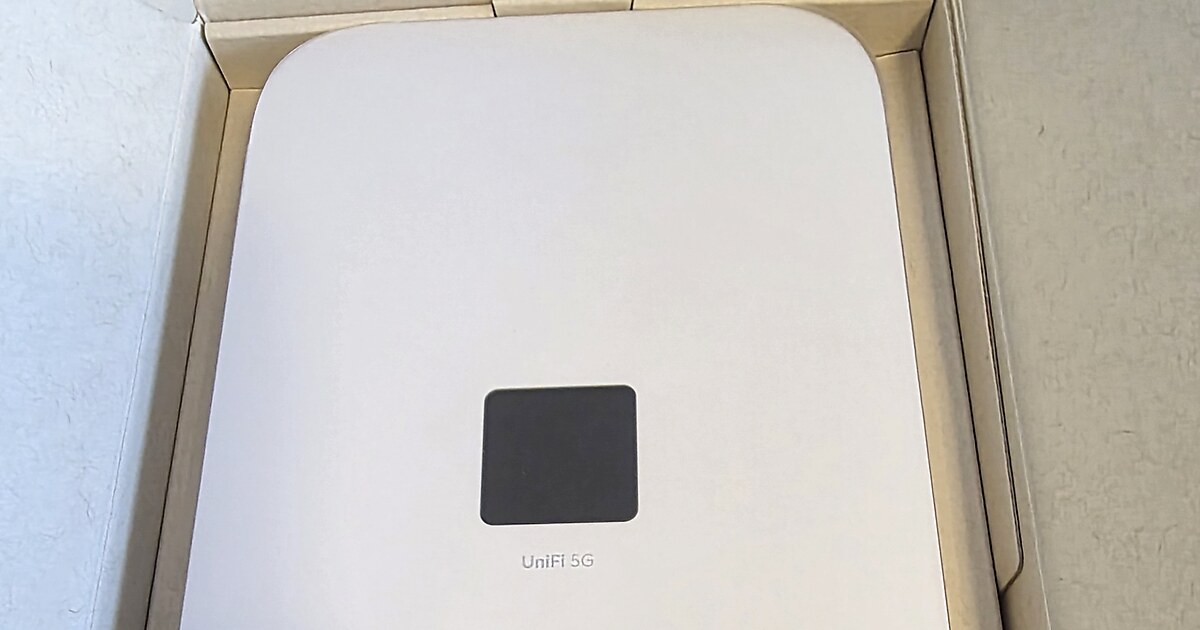
5G business internet is valuable because it can provide a different path from a wired service.
If someone damages the cable feeding your building, having two services that share the same physical route may not provide the redundancy you expected. A cellular connection can provide useful path diversity.
That makes 5G especially attractive as backup connectivity. With properly configured networking equipment, critical traffic can fail over to the cellular connection until the primary service returns.
For some small sites, temporary offices, construction locations, or difficult-to-service buildings, 5G can even make sense as the primary service.
But cellular performance varies with signal quality, building construction, tower congestion, equipment placement, carrier, and location. The question is not whether somebody gets five bars in the parking lot. The question is whether the business connection performs consistently where the equipment will actually be installed.
Do you need two internet connections?
Maybe.
Ask one practical question:
What does an hour without internet cost us?
If people can work around it, one connection may be reasonable. If phones stop, payments stop, cloud apps stop, and customers notice, a second connection is easier to justify.
A backup connection is not only about uptime. It is about reducing the size of an outage.
Two connections do not automatically mean redundancy
You can order service from two providers and still discover that both connections enter the building through the same path or depend on shared infrastructure.
When redundancy matters, look at physical path diversity, carrier diversity, wired-versus-cellular diversity, automatic failover, firewall configuration, DNS behavior, phone-system behavior during failover, and whether critical applications actually work on the backup path.
A second circuit sitting on the wall is not a redundancy strategy until somebody tests it.
Speed matters. It is just not the only thing.
When comparing options, look beyond the headline download number.
Consider download, upload, latency, reliability, support, service commitments, static IP requirements, contract terms, installation cost, construction requirements, and backup options.
For most businesses, the goal is not to win a speed test. The goal is to make connectivity dependable enough that people can stop thinking about it.
Four practical patterns to evaluate
One good wired connection
Best when the business can tolerate an occasional outage and budget is the priority.
Fiber or cable primary + 5G backup
Best when downtime affects phones, cloud applications, or customer service and the location has good cellular coverage.
Two wired business connections
Best when downtime is expensive and genuinely diverse providers or routes are available.
Two wired connections + cellular contingency
Best when connectivity is truly mission-critical and multiple failure layers are justified.
There is no universal winner.
That is the point.
The question to ask before signing anything
Before renewing or replacing your business internet, ask:
What are we trying to protect against?
Slow performance? Not enough upload? A bad provider? A single point of failure? An outage that takes down the phones? A building with limited options?
Once that answer is clear, choosing between fiber, cable, and 5G gets much easier.
And sometimes the right answer is using more than one.
If you are trying to determine whether your current connection is right for your office, or whether backup internet would materially reduce your risk, Miclyn can help you evaluate the network, the applications that depend on it, and the options available at your location. Talk with Miclyn about your network.